Tuesday, August 28, 2007

Alberto Gonzales and the (Latino) American Dream?


By STEVEN LEE MYERS and PHILIP SHENON

NYT

WACO, Tex., Aug. 27 — Attorney General Alberto R. Gonzales, whose tenure has been marred by controversy and accusations of perjury before Congress, announced his resignation in Washington today, declaring that he had “lived the American dream” by being able to lead the Justice Department.


Mr. Gonzales, who had rebuffed calls for his resignation for months, submitted it to President Bush by telephone on Friday, a senior administration official said. There had been rumblings over the weekend that Mr. Gonzales’s departure was imminent, although the White House sought to quell the rumors.

Mr. Gonzales appeared cheerful and composed when he announced that he was stepping down effective Sept. 17. His very worst days on the job were “better than my father’s best days,” he said, alluding to his family’s hardscrabble past.

“Thank you, and God bless America,” Mr. Gonzales said, exiting without responding to questions.

In Waco, President Bush said he had accepted the resignation reluctantly. He praised his old friend as “a man of integrity, decency and principle” and complained of the “months of unfair treatment” that preceded the resignation.

“It’s sad,” Mr. Bush said, asserting that Mr. Gonzales’s name had been “dragged through the mud for political reasons.”

The president said the solicitor general, Paul D. Clement, would serve as acting attorney general until a permanent replacement was chosen.

Mr. Bush has not yet chosen a replacement but will not leave the position open long, the senior administration official said early this morning. Among those being mentioned as a possible successor were Michael Chertoff, the secretary of homeland security who is a former federal prosecutor, assistant attorney general and federal judge; Christopher Cox, the head of the Securities and Exchange Commission; and Larry D. Thompson, a former deputy attorney general who is now senior vice president and general counsel of PepsiCo Inc.

Mr. Bush repeatedly stood by Mr. Gonzales, an old friend and colleague from Texas, even as Mr. Gonzales faced increasing scrutiny for his leadership of the Justice Department over issues including his role in the dismissals of nine United States attorneys late last year and whether he testified truthfully about the National Security Agency’s surveillance programs.

Earlier this month, at a news conference, Mr. Bush dismissed accusations that Mr. Gonzales had stonewalled or misled a Congressional inquiry. “We’re watching a political exercise,” Mr. Bush said. “I mean, this is a man who has testified, he’s sent thousands of papers up there. There’s no proof of wrong.”

But Democrats cheered Mr. Gonzales’s departure. “Alberto Gonzales was never the right man for this job,” said Senator Harry Reid of Nevada, the majority leader. “He lacked independence, he lacked judgment, and he lacked the spine to say ‘no’ to Karl Rove.”

Senator Charles E. Schumer, the New York Democrat who sits on the Judiciary Committee and has been calling for Mr. Gonzales’s resignation for months, said this morning: “It has been a long and difficult struggle, but at last the attorney general has done the right thing and stepped down. For the previous six months, the Justice Department has been virtually nonfunctional, and desperately needs new leadership.”

Senator Schumer said that “Democrats will not obstruct or impede a nominee who we are confident will put the rule of law above political considerations.”

Another Democrat on the Judiciary Committee who has been highly critical of Mr. Gonzales, Senator Russell D. Feingold of Wisconsin, said the next attorney general must be a person whose first loyalty is “to the law, not the president.”

But a Republican senator who has known Mr. Gonzales for years, Kay Bailey Hutchison of Texas, paid tribute to the Harvard-educated Mr. Gonzales, the first attorney general of Hispanic heritage. “He has served in difficult times and I believe is a good, honest man who has worked hard in public service all his life,” the senator said in a statement.

Mr. Gonzales’s resignation is the latest in a series of high-level departures that has reshaped the end of Mr. Bush’s second term. Mr. Rove, the political adviser who is another of Mr. Bush’s close circle of aides from Texas, stepped down two weeks ago.

The official who disclosed the resignation in advance today said that the turmoil over Mr. Gonzales had made it difficult for him to continue as attorney general. “The unfair treatment that he’s been on the receiving end of has been a distraction for the department,” the official said.

A senior administration official said today that Mr. Gonzales, who was in Washington, had called the president in Crawford, Tex., on Friday to offer his resignation. The president rebuffed the offer, but said the two should talk face to face on Sunday.

Mr. Gonzales and his wife flew to Texas, and over lunch on Sunday the president accepted the resignation with regret, the official said.

On Saturday night Mr. Gonzales was contacted by his press spokesman to ask how the department should respond to inquiries from reporters about rumors of his resignation, and he told the spokesman to deny the reports.

White House spokesmen also insisted on Sunday that they did not believe that Mr. Gonzales was planning to resign. Aides to senior members of the Senate Judiciary Committee said over the weekend that they had received no suggestion from the administration that Mr. Gonzales intended to resign.

As late as Sunday afternoon, Mr. Gonzales himself was denying through his spokesman that he was quitting. The spokesman, Brian Roehrkasse, said Sunday that he telephoned the attorney general about the reports of his imminent resignation “and he said it wasn’t true — so I don’t know what more I can say.”

Steven Lee Myers reported from Waco, Texas, and Philip Shenon reported from Washington.

Wednesday, August 15, 2007

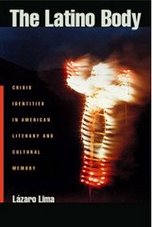
The Latino Body and the National Archive(s)


Don Matias Romero. Envoy of the Republic of Mexico, 1863; three-quarter-length, standing. (College Park, Maryland, No. 111-B-1228.)


National Archives Celebrates Hispanic American Heritage Month


Washington, DC
The National Archives will celebrate Hispanic American Heritage Month with special films, programs, and lectures. These events are free and open to the public and will be held at the National Archives Building in Washington, DC, which is located on the National Mall at Constitution Ave. and 7th Street, NW, and is fully accessible.

New Thinking on Lincoln's Legacy: Hispanic Perspectives
Tuesday, September 18, at noon, William G. McGowan Theater
Abraham Lincoln’s 200th birthday is in 2009. Does his legacy have resonance within Hispanic communities? Estévan Rael-Gálvez, New Mexico State Historian; Ernesto Chávez, associate professor of history at the University of Texas at El Paso; and Jerry Thompson, Regents Professor, Social Science Department, Texas A&M International University, will unearth fresh historical perspectives on Lincoln, his era, and his legacy.

Film: The Lemon Grove Incident
Friday, September 21, at noon, William G. McGowan Theater
Based on historical events, this docudrama, which blends archival photos, dramatic reenactments, and interviews with former students, portrays the efforts of the Mexican American community in Lemon Grove, CA, to challenge local school segregation practices and racial discrimination in Depression-era America. Produced by Paul Espinosa. (1985, 58 minutes.)

Playing America’s Game: Baseball, Latinos, and the Color Line
Wednesday, September 26, at noon, Jefferson Room
Latinos have emerged as baseball’s largest minority group over the last two decades, highlighted by the pitching of Pedro Martínez and the hitting exploits of Alex Rodriguez. In Playing America’s Game: Baseball, Latinos, and the Color Line, Adrian Burgos examines the long history of Latinos in U.S. professional baseball, focusing particularly on their significant presence in the Negro Leagues.

Zoot Suit Riots
Friday, October 12 at 12 noon, William G. McGowan Theater
In August 1942 the murder of a young Mexican-American man ignited a firestorm in Los Angeles, California. In no time at all, ethnic and racial tensions that had been building up over the years boiled over. Police fanned out across the city in a dragnet that netted 600 Mexican Americans. Among those accused of murder was a young "zoot-suiter" named Hank Leyvas -- the poster boy for an entire generation of rebellious Mexican kids who refused to play by the old rules. These dramatic events are chronicled in this 2001 documentary from the PBS series, American Experience. Written, produced, and directed by Joseph Tovares. (60 minutes.).
Related National Archives “Know your Records” Programs

All programs are open to the public and are free unless otherwise noted.

Hispanics in the 19th Century through Military and Census Records
Wednesday, September 26, 9:30–11:30 a.m., Jefferson Room
National Archives staff archivist Constance Potter and archives specialist John Deeben will present a workshop on Hispanics in the Southwest in the 19th century, focusing on Civil War military service, regimental, and pension records for volunteers from New Mexico, Arizona, and Texas as well as population and non-population census schedules. Reservations are required, and a fee of $20 is payable by cash or check at the door. Call 202-357-5333.

Mexican Border Crossings
Thursday, September 13, at 11 a.m., Room G-24, Research Center
National Archives staff archivist Claire Kluskens will discuss Mexican border crossing records that document the arrival of permanent and temporary immigrants to the United States at the U.S.-Mexico border.

Hispanic Volunteers in the Antebellum U.S. Army
Tuesday, September 18, at 11 a.m., Room G-24, Research Center
National Archives staff archives specialist John Deeben will discuss service records and other documentation for Hispanics who served in the U.S. Army, 1835–55. Many fought in the Second Seminole War, the Mexican War, and the Apache and Navajo wars of the 1850s. (This lecture will be repeated at the National Archives at College Park, MD, in Lecture Room B, on Thursday, September 20, at 11 a.m.)

Hispanic-Related Films from the National Archives
Friday, September 21, at 11 a.m., Room G-24, Research Center
National Archives staff present and discuss a variety of film clips illustrating Hispanic population, culture, activities, and families in the early to mid-20th century.

Documenting Community, Politics, and the Economy in Puerto Rico, 1898–1950
Tuesday, September 25, at 11 a.m., Room G-24, Research Center
National Archives branch chief Kenneth Heger will provide an overview of the records of the two Federal agencies that administered Puerto Rico—the Bureau of Insular Affairs and the Office of Territories—focusing on their value to local historians. (This lecture will be repeated at the National Archives at College Park, MD, in Lecture Room B, on Thursday, September 27, at 11 a.m.)

To verify the date and times of the programs, the public should call the Public Programs Line at: 202-357-5000, or view the Calendar of Events on the web. To contact the National Archives, please call 1-866-272-6272 or 1-86-NARA-NARA (TDD) 301-837-0482.

Friday, August 10, 2007

The Dream Act and the Latino Body as War Fodder

Fernando Suárez del Solar, whose son Jesús Alberto was one of the first U.S. servicemen killed in Iraq, became an outspoken peace activist, and Founder/Director Guerrero Azteca. His recent post, "On the DREAM Act and the U.S. Military: An Open Letter to Latino and Latina students and all leaders of immigrant rights organizations" deserves a wide audience, and I reproduce it here.

by Fernando Suárez del Solar

In the wake of the failed immigration reform, passionate discussions have arisen among various organizations both for and against the DREAM Act.It gives me great joy to see students taking non-violent action to find a solution to the immigration question. Many of them came to the United States as children and have finished their high school education. Now, because they lack legal documents, they face an uncertain future that may deny them the opportunity to attend college or find a decent job. The DREAM Act offers them a light at the end of an otherwise dark and uncertain road.

I see students on fasts, in marches, lobbying elected officials, all in the name of the DREAM Act's passage. But BEWARE. Be very careful. Because our honorable youth with their dreams and wishes to serve their new country are being tricked and manipulated in an immoral and criminal way.

Why do I say this? Simply put, the DREAM Act proposes two years of college as a pathway to permanent residency but it also includes a second option linked to the so-called war on terror-"two years of military service." Our young people may not see that this is a covert draft in which thousands of youth from Latino families will be sent to Iraq or some other war torn nation where they will have to surrender their moral values and become a war criminal or perhaps return home in black bags on their way to a tomb drenched with their parents' tears.

How many of our youth can afford college? How many will be able to take the educational option? Unfortunately very few because the existing system locks out the children of working families with high tuition and inflated admissions criteria. Most will be forced to take the military option to get their green card. But what good is a green card to a dead person? What good is a green card to a young person severely wounded in mind and body?

I ask our undocumented youth to read the following passages regarding the plans of the Pentagon and the Bush administration.In his testimony before the Senate Armed Services Committee on July 10, 2006, Under Secretary of Defense David Chu said:

"According to an April 2006 study from the National Immigration Law Center, there are an estimated 50,000 to 65,000 undocumented alien young adults who entered the U.S. at an early age and graduate from high school each year, many of whom are bright, energetic and potentially interested in military service...Provisions of S. 2611, such as the DREAM Act, would provide these young people the opportunity of serving the United States in uniform."

More recently, Lt. Col. Margaret Stock of the U.S. Army Reserve and a faculty member at West Point told a reporter that the DREAM Act could help recruiters meet their goals by providing a "highly qualified cohort of young people" without the unknown personal details that would accompany foreign recruits. "They are already going to come vetted by Homeland Security. They will already have graduated from high school," she said. "They are prime candidates."(Citations from research by Prof. Jorge Mariscal, UC San Diego)

As you can see, our undocumented youth are being targeted by military recruiters. And equally important is something that few people have mentioned-there is no such thing as a two year military contract. Every enlistment is a total of eight years.
Given these facts, I invite all young people who are filled with hope and dreams and energy to fight for human rights and for a fair pathway to legalization.

But they must also demand that the military option of the DREAM Act be replaced by a community service option (as appeared in earlier drafts of the legislation) so that community service or college become the two pathways to permanent residency. Only then will they avoid becoming victimized by a criminal war as my son Jesús Alberto did when he died on March 27, 2003 after stepping on an illegal U.S. cluster bomb. Through education or community service our undocumented youth can contribute to their communities and their future will be filled with peace and justice.

Fernando Suarez del Solar

Thursday, August 9, 2007

The Latino Body at War: Camilo Mejía, Prisoner of Conscience


Camilo Mejía served almost nine months in a military prison for refusing to return to the Iraq war. My Road Out Of Iraq charts the experiences that led to jail.

Tuesday, July 31, 2007

The Latino Body in Jail

Largely obscured by the rancorous debate surrounding U.S. immigration policy is the emergence of a trend that should be a cause of concern to all Latino communities: the explosion of the number of Latinos in prison.With one-in-six Latino males born today expected to spend some time in prison during their lives, the future portends devastating consequences for Latino communities.

Too many Latino men are living in prison

RYAN S. KING and ANGELA MARIA ARBOLEDA

Racial Breakdown:
Incarceration is not an equal opportunity punishment

On December 31, 2005, there were 2,193,798 people in U.S. prisons and jails. The United States incarcerates a greater share of its population, 737 per 100,000 residents, than any other country on the planet. But when you break down the statistics you see that incarceration is not an equal opportunity punishment.

U.S. incarceration rates by race, June 30, 2006:

* Whites: 409 per 100,000
* Latinos: 1,038 per 100,000
* Blacks: 2,468 per 100,000

Gender is an important "filter" on the who goes to prison or jail, June 30, 2006:

* Females: 134 per 100,000
* Males: 1,384 per 100,000

Look at just the males by race, and the incarceration rates become even more frightening, June 30, 2006:

* White males: 736 per 100,000
* Latino males: 1,862 per 100,000
* Black males: 4,789 per 100,000

If you look at males aged 25-29 and by race, you can see what is going on even clearer, June 30, 2006:

* For White males ages 25-29: 1,685 per 100,000.
* For Latino males ages 25-29: 3,912 per 100,000.
* For Black males ages 25-29: 11,695 per 100,000. (That's 11.7% of Black men in their late 20s.)

Or you can make some international comparisons:
South Africa under Apartheid was internationally condemned as a racist society.

* South Africa under apartheid (1993), Black males: 851 per 100,000
* U.S. under George Bush (2006), Black males: 4,789 per 100,000

What does it mean that the leader of the "free world" locks up its Black males at a rate 5.8 times higher than the most openly racist country in the world?

Statistics as of June 30, 2006 from Prison and Jail Inmates at Midyear 2006, Table 14. The "rates by race" statistics are calculated from the component parts of Table 14. South Africa figures from Marc Mauer, Americans Behind Bars: The International Use of Incarceration. All references to Blacks and Whites are for what the Bureau of Justice Statistics and U.S. Census refer to as "non-Hispanic Blacks" and "non-Hispanic Whites".)

Sunday, July 29, 2007

España, recuerdos y noticias


I can't think of anyone who's been more humane, more capable, more loving, more obstinate, more primal Eva, than Eva Lloréns. Daughter of Spanish painter Franciso Lloréns, disciple of Joaquin Sorolla, Eva loved two things: Galicia and the person who kept her in the States, in Stratford, Connecticut, for as long as she did. I miss her terribly and want to keep her memory alive. She hated the web, posting her paintings, anything that made it easier to connect without really connecting on a human level. The irony now is in this medium, the mnemonic register that gives texture to my memories of her and everything she did to keep me from being less than she imagined.

We read Garcilaso's Soneto XXIII in a survey course on Peninsular literature. That is my first memory of her and so I find it appropriate to begin this technology of memory in her name with Garcilaso's brilliant symmetry of form and topos: death as regenerative life, and writing, say, a sonnet, as mnemonic memory. Proof of life beyond the brittle seams of heart and its limited beats.


Garcilaso de la Vega (1501-1536)


Soneto XXIII


En tanto que de rosa y azucena
se muestra la color en vuestro gesto,
y que vuestro mirar ardiente, honesto,
enciende al corazón y lo refrena;

y en tanto que el cabello, que en la vena
del oro se escogió, con vuelo presto,
por el hermoso cuello blanco, enhiesto,
el viento mueve, esparce y desordena:

coged de vuestra alegre primavera
el dulce fruto, antes que el tiempo airado
cubra de nieve la hermosa cumbre;

marchitará la rosa el viento helado.
Todo lo mudará la edad ligera
por no hacer mudanza en su costumbre.